City dogs live a particular life: elevators, sidewalks, close neighbors, other dogs at close quarters, and exercise that has to be scheduled because it cannot just happen out a back door. The question owners ask (how much exercise does my dog actually need?) has no single number, but it has a usable framework: breed and age set the baseline, the dog's behavior audits the result, and the form of exercise matters as much as the minutes. A dog can be walked for an hour and still be under-exercised in the ways that count, or exercised well in half the time.
Here are the numbers and the reasoning behind them.
The baseline numbers
Reading your own dog's audit
The dog keeps the real ledger. Under-exercised dogs advertise it in a standard set of ways: destructive chewing that targets furniture and baseboards, restlessness in the evening when the house is trying to settle, demand barking, rough play that escalates, weight creeping up, and a dog who treats a routine walk like a jailbreak. Over-exercised dogs show a different set: soreness, lagging on walks they used to enjoy, irritability, and puppies who get more frantic the more they are run, because overtired young dogs lose what little self-control they have. The answer moves both ways, and the dog's evenings are the most honest report you get.
Minutes are not the unit: what counts as exercise
A leashed walk around the block is transportation and information, not a workout, for most healthy adult dogs. It matters (sniffing is mental work, and the neighborhood bulletin board of smells is genuinely tiring in a good way) but it does not spend a young sporting dog's physical budget. Real expenditure comes from running, playing with other dogs, swimming, fetch with hills in it, and training, which is exercise wearing a thinking cap. A day camp day at a facility with indoor and outdoor play space counts as a full exercise day for most dogs, which is why owners are told to expect a quiet evening and to skip the extra long walk. Combining forms across the week (walks daily, big play two or three days, training woven through) beats one heroic weekend outing followed by six sedentary days, for joints and behavior alike.
Adjusting for the Charlotte calendar
Piedmont weather edits the plan, planned or not. Summer heat and humidity cap midday exertion for all dogs and become dangerous for flat-faced breeds; exercise moves to morning and evening, and indoor options carry the load. Puppies and seniors need shorter, more frequent outings year-round. Winter cold bothers few Charlotte dogs seriously, but ice storms shut sidewalks down and argue for indoor play space and hallway training games. The facilities with large indoor arenas exist in this market precisely because the weather removes outdoor days every single month of the year, and a city dog's exercise cannot be a fair-weather arrangement.
The exercise nobody counts: purpose
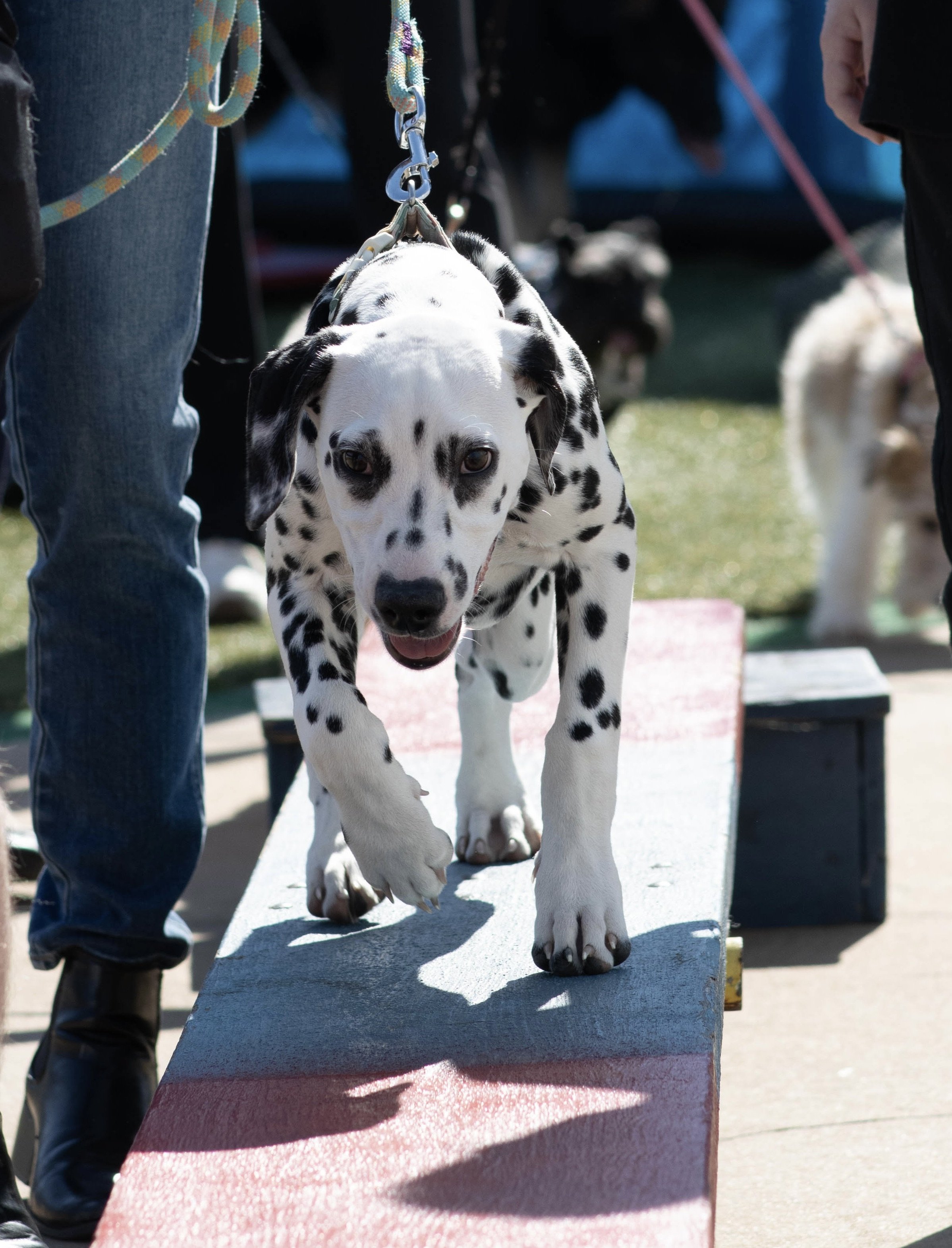
Working and sporting breeds, and plenty of mixes, carry a second need underneath the physical one: a job. Dogs bred to retrieve, herd, guard, or hunt settle noticeably better when the day includes tasks (training sessions, structured play with rules, scent games, a day program built around schooling) than when they are merely run. This is why training-based day programs talk about giving dogs purpose rather than just tiring them out. A tired dog is a good evening. A dog who worked is a good week.
When in doubt, change one variable for two weeks and watch the evenings. More exercise, better-timed exercise, or one added rest day will each move the report your dog files at home, and the dog's answer is more reliable than any chart, including this one.
Common questions
Is one long weekend hike enough for the week?
No. Dogs need daily movement, and a huge weekend effort after five quiet days is an injury pattern, not a plan. Spread the work; keep the hike as the bonus it should be.
Can you over-exercise a puppy?
Yes. Growing joints are vulnerable, and forced long runs are discouraged until growth plates close. Short, frequent, puppy-paced play is the pattern, guided by the five-minutes-per-month idea.
My dog still bounces after a long walk. What gives?
The walk may be spending little of the right budget. Add play, training, or a camp day, and check the evening audit again. Some dogs also need to practice settling itself, which is a trainable skill, not a personality verdict.
← All guides from Star Dog← Back to Star Dog