Almost every good dog facility in Charlotte starts the same way: before your dog joins day camp or group play, the dog gets evaluated. Owners occasionally bristle at this, hearing it as a judgment on their dog or a hurdle designed to sell training. It is neither. The evaluation is how a facility learns what your dog needs, how the dog handles the environment, and which group, if any, the dog belongs in on day one. A facility that skips it is not being easygoing. It is making promises about a dog it has not met.
Here is what the process involves and how to get the most from it.
- The conversation. Staff ask about your dog's history: health, vaccinations, other dogs, people, fears, past incidents, and what you hope camp will do. Answer completely; this shapes everything after.
- The facility tour. You see the play spaces, rest areas, and where your dog would spend the day. This is your evaluation running in the other direction, and it should be welcome.
- First impressions, on leash. A trainer meets your dog in a calm space and reads the basics: how the dog greets people, handles handling, and settles after excitement.
- One dog at a time. Introductions to other dogs happen gradually: a calm, known dog first, distance managed, body language read by people who do it all day.
- Into a small group. If the early steps go well, the dog joins a small, matched group under close supervision, and staff watch play style, confidence, and recovery from surprises.
- The report. You hear how it went, which group fits, any concerns, and sometimes a recommendation: a training course first, shorter days to start, or a ready yes.
Why a training course sometimes comes first
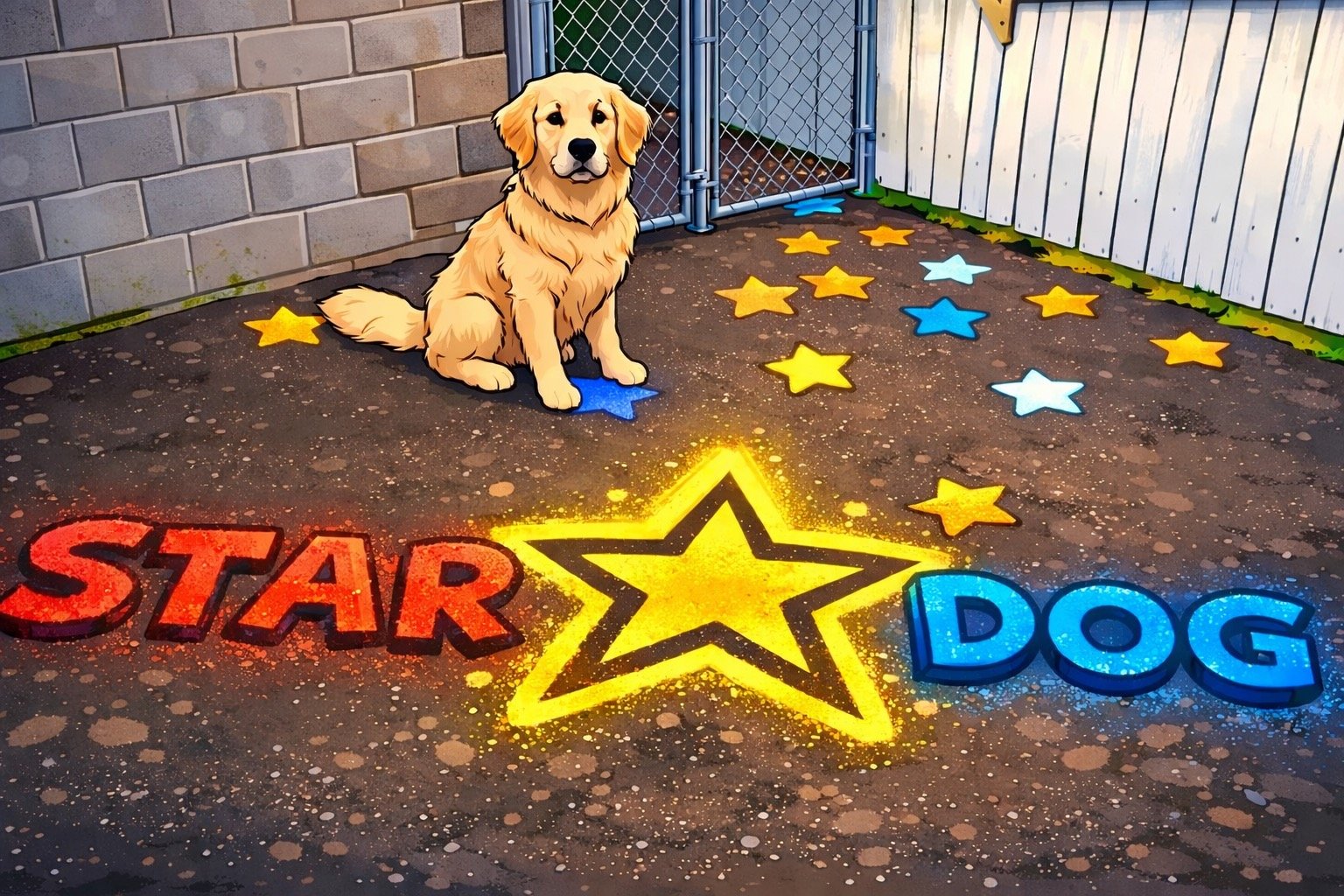
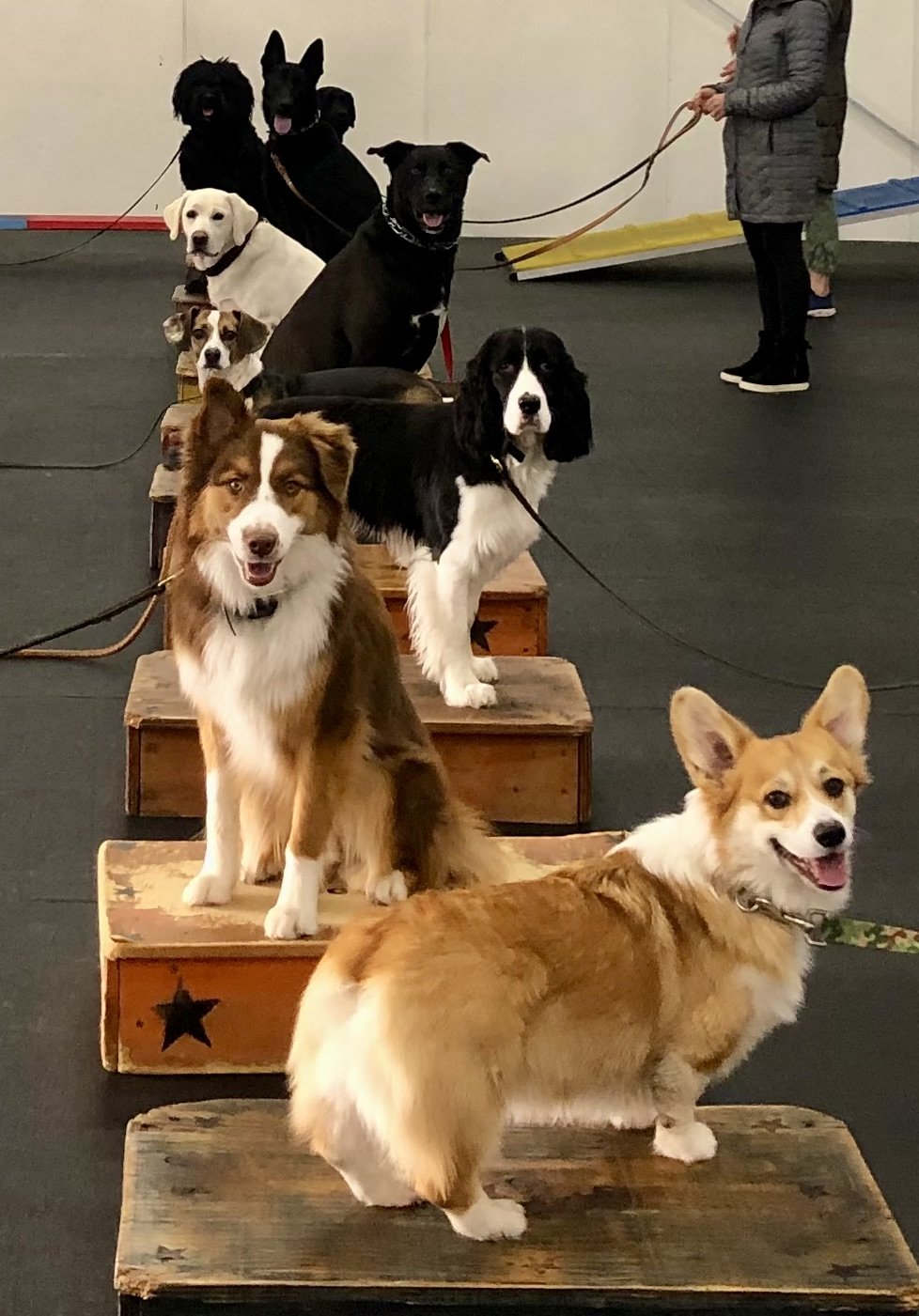
Some dogs arrive at evaluation with enthusiasm and no brakes: they play too hard, read no signals, and overwhelm other dogs without a mean bone in them. Others arrive frightened of the whole proposition. In both cases a facility may route the dog through a training course before day camp, which is the system working, not a rejection. The dog learns the facility, the staff, and some manners in a controlled setting, then joins camp with the skills to enjoy it. At Star Dog the model is stated plainly: new dogs are evaluated by a trainer, or complete a training course, before participating in day camp. The either/or protects the dog in front of them, and every dog already in the group.
What evaluators are actually reading
Body language, mostly: soft versus stiff posture, how the dog approaches and how it handles being approached, whether arousal comes down after a spike or keeps climbing, how it responds to a correction from another dog, and whether it checks in with the humans or disappears into the pack. None of this is pass/fail character judgment. It is matching. Dogs have play styles and social budgets the way people have party stamina, and the evaluation's job is to find the room where this dog, on this day, will do well. Dogs also change: a dog evaluated at eight months gets re-read as an adult, because adolescence rewrites social behavior in both directions.
How owners can help
Bring vaccination records, be honest about incidents (a scuffle at the dog park is information, not a confession), and say what your dog is actually like on a bad day. On evaluation day, keep your own energy boring: hand the leash over, follow staff instructions, and let the dog have the experience without your anxiety narrating it. Afterward, take the report as coaching. If training comes first, it is a path in, not a door closed, and dogs who take the path usually end up the camp regulars nobody worries about.
Think of the evaluation the way you would think of a first day at any school: it exists so nobody, dog or staff, has to guess. Facilities that guard the quality of their groups with a real process are also the facilities whose groups stay calm, stable, and worth joining the rest of the year.
Common questions
Can a dog fail an evaluation?
A dog can be found not ready yet, or not suited to group play, which is different from failing. Some dogs are happier with training, walks, and one-on-one play, and a good facility says so honestly.
Does my dog need training before day camp?
Not necessarily. Many dogs evaluate straight into a group. Training-first is recommended when the dog needs skills or confidence to be safe and happy in the group, and it is a route in, not a refusal.
What if my dog is shy?
Say so upfront. Shy dogs often do well starting with shorter days, smaller groups, and staff who know to let them observe before joining. Confidence built gradually tends to hold.
← All guides from Star Dog← Back to Star Dog