A puppy's first months are the cheapest training you will ever buy, because the learning is happening anyway. Between roughly three and sixteen weeks, puppies pass through a sensitive socialization period when new sights, sounds, surfaces, people, and other dogs get filed under normal. What gets filed then tends to stay filed for life. What gets missed does not become impossible later, but it becomes slower, dearer, and sometimes never quite complete. Puppy education is mostly the deliberate use of that window.
This is what a good puppy program covers, in the order the puppy needs it.
- Handling and vet-proofing. Ears, paws, mouth, and collar handled gently and often, paired with good things, so exams and grooming later are routine rather than a wrestling match.
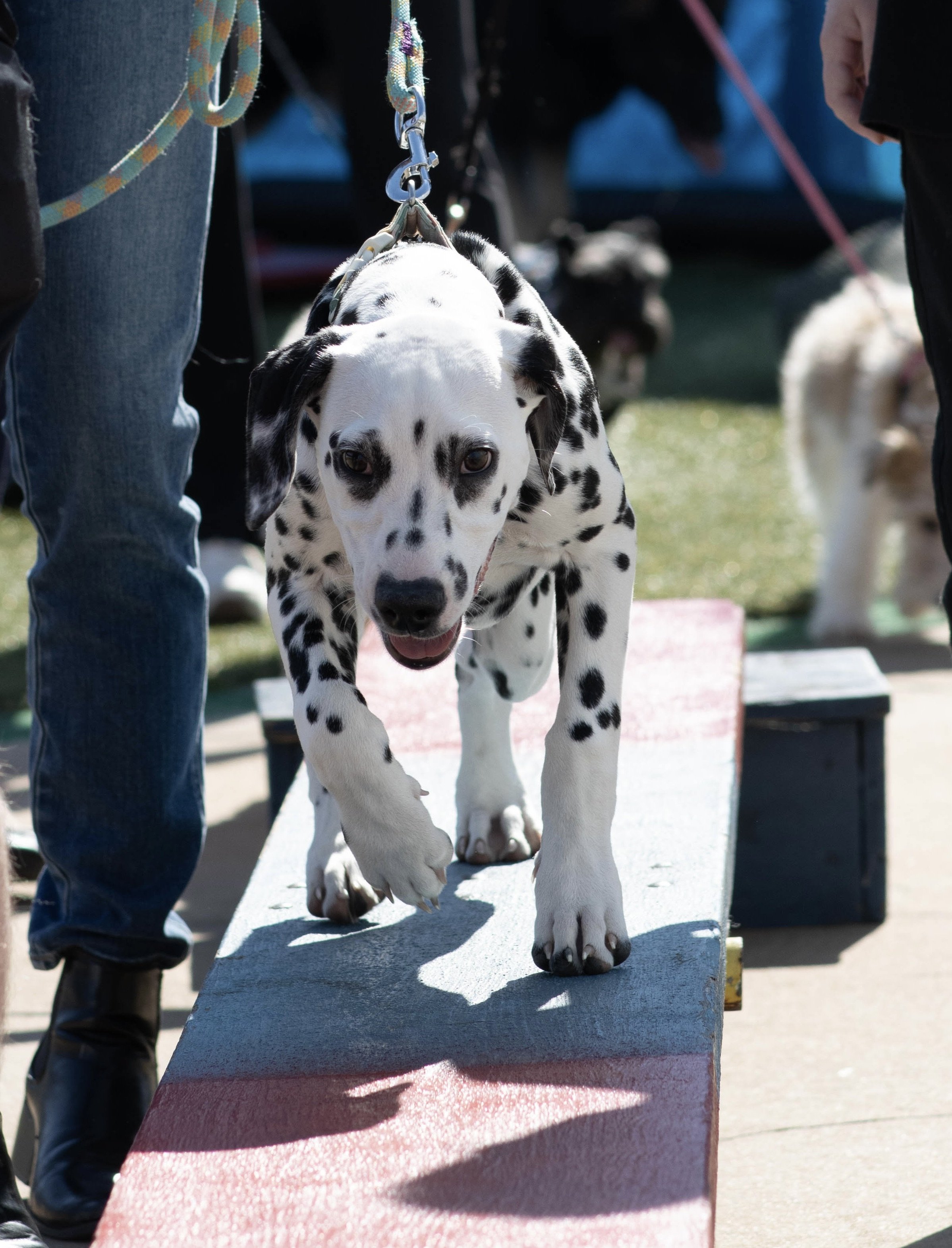
- The world tour. Different floors and surfaces, stairs, traffic sounds, umbrellas, hats, bicycles, and people of every age and size, met at the puppy's pace and never forced.
- Other dogs, chosen carefully. Play with known, gentle, healthy dogs and supervised puppy groups, where the lessons are bite inhibition and reading other dogs' signals.
- Name, recall, and the first cues. The name becomes worth answering, come becomes the best word in the language, and sit, down, and leave it arrive as games, not drills.
- Leash as a non-event. Short, positive introductions to walking on a leash without pulling, before the puppy is strong enough to make pulling a real contest.
- Alone time, in small doses. Brief, boring separations that teach the puppy that people leaving is normal and temporary. This is how separation anxiety is prevented rather than treated.
- House rules. Crate comfort, toilet routine, chewing directed at legal targets, and the household's actual rules, taught from day one rather than renegotiated at six months.
Why a program beats doing it casually
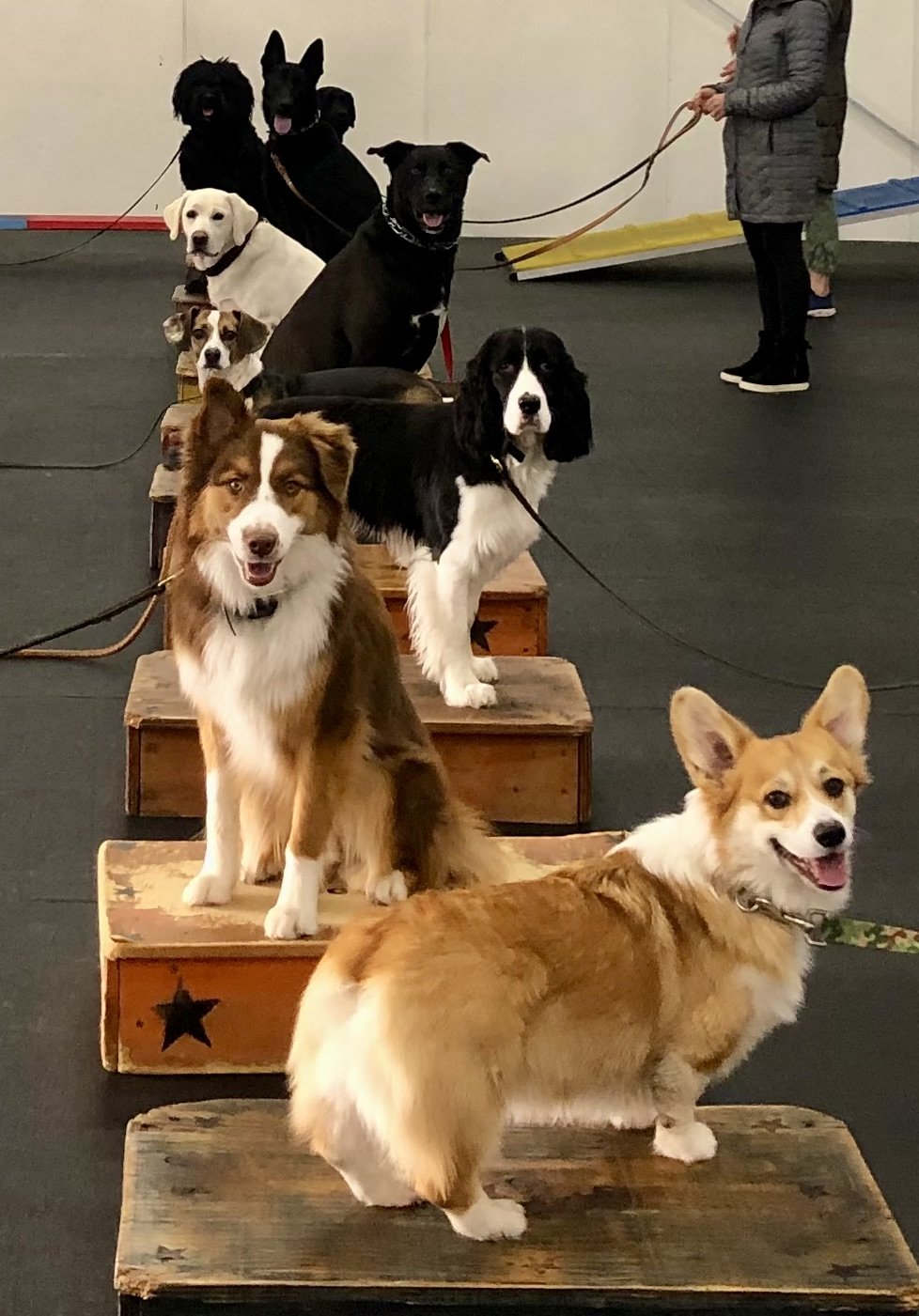
Owners can do much of this at home, and should. What a structured puppy education program adds is the two things home life cannot easily supply: a room full of other puppies learning the same lessons under a trainer's eye, and a second set of professional eyes on your particular puppy. Trainers spot the shy puppy who needs slower introductions and the bold one who needs to learn that other dogs get a vote, long before either pattern hardens. Facilities like Star Dog build puppy schooling into their model for exactly this reason: the evaluation and early classes are where a city dog's whole social career gets its start.
The vaccination question
The standard worry is disease: puppies are not fully vaccinated during the prime socialization weeks, so owners keep them home and miss the window entirely. The balanced answer used by most veterinarians and trainers is controlled exposure: carry the puppy in public rather than walking it on high-traffic ground, choose clean environments and known healthy dogs, attend puppy classes that require proof of the vaccinations given so far and clean their floors accordingly, and avoid dog parks and pet-store floors until the series is complete. The risk of a badly socialized adult dog is itself a health and safety risk, and the goal is managing both risks at once rather than eliminating one by surrendering to the other. Ask your own vet; they know the local disease picture.
What to practice at home between sessions
Keep sessions tiny: a few minutes, several times a day, ending while the puppy is still keen. Reward the behaviors you want the moment they happen. Rotate through the week's class lesson in your kitchen, your yard, and one new place, because puppies learn locations rather than rules at first, and a sit that only exists in the training room is only half a sit. And protect sleep: puppies need far more of it than they volunteer for, and an overtired puppy bites, zooms, and learns badly. Some of puppy education is teaching the human when to stop.
One last habit separates owners whose puppies sail into adolescence from those who hit a wall at seven months: keep going after the puppy class ends. The socialization window narrows, but learning and exposure continue, and a second class or regular supervised play keeps the early work alive while the teenage phase does its best to test all of it.
Common questions
When should a puppy start classes?
As early as your vet approves, commonly after the first round of vaccinations, in a class that requires proof of vaccination and keeps its space clean. Earlier, with controls, beats later.
My puppy bites everything. Is that normal?
Yes. Mouthing is how puppies explore, and bite inhibition (learning how soft to be) is learned through play feedback in these weeks. Redirect to toys, and let trainers and other puppies do their share of the teaching.
We missed the early window. Is it too late?
No. Socialization continues, just more slowly, and adolescent dogs take to structured classes well. Start where the dog is; do not write off a dog for a calendar.
← All guides from Star Dog← Back to Star Dog