Therapy dogs are the ones you meet in hospitals, schools, libraries, and nursing homes: calm dogs, working with their handlers, being petted by strangers in unfamiliar places. People assume the job is mostly temperament (a naturally sweet dog) and it is partly that. But between the sweet dog at home and the dog working a hospital corridor sits a deliberate preparation: socialization, obedience under distraction, comfort with medical equipment and unpredictable humans, and an evaluation that says the team is ready.
Here is what getting a dog ready actually involves, as a checklist you can work against.
- Start with honest temperament: the dog should genuinely like strangers, recover quickly from surprises, and show no guarding of food, toys, or its person.
- Build rock-solid basics first: loose-leash walking, sit, down, stay, recall, and leave it, reliable around distractions, not just in the kitchen.
- Socialize to the actual job environment: wheelchairs, walkers, carts, elevators, slippery floors, alarms, crowds, and people moving unpredictably.
- Practice being handled by strangers: paws touched, ears and tail brushed against, awkward hugs from well-meaning people, all rewarded and calm.
- Teach the off switch: settling quietly at the handler's feet for stretches of time between interactions, in busy places.
- Proof the dog around other dogs: therapy visits often involve encountering another team, and your dog must ignore them politely.
- Learn the handler half: reading your dog's stress signals, managing greetings, hygiene and grooming standards, and ending visits before the dog is tired.
- Pass an evaluation with a recognized therapy dog organization or program, which tests the team together, not the dog alone.
- Keep records straight: vaccinations, health checks, and any facility requirements for the places you plan to visit.
- Build up visit length gradually: short, successful visits first, longer ones as the dog shows it can sustain the work happily.
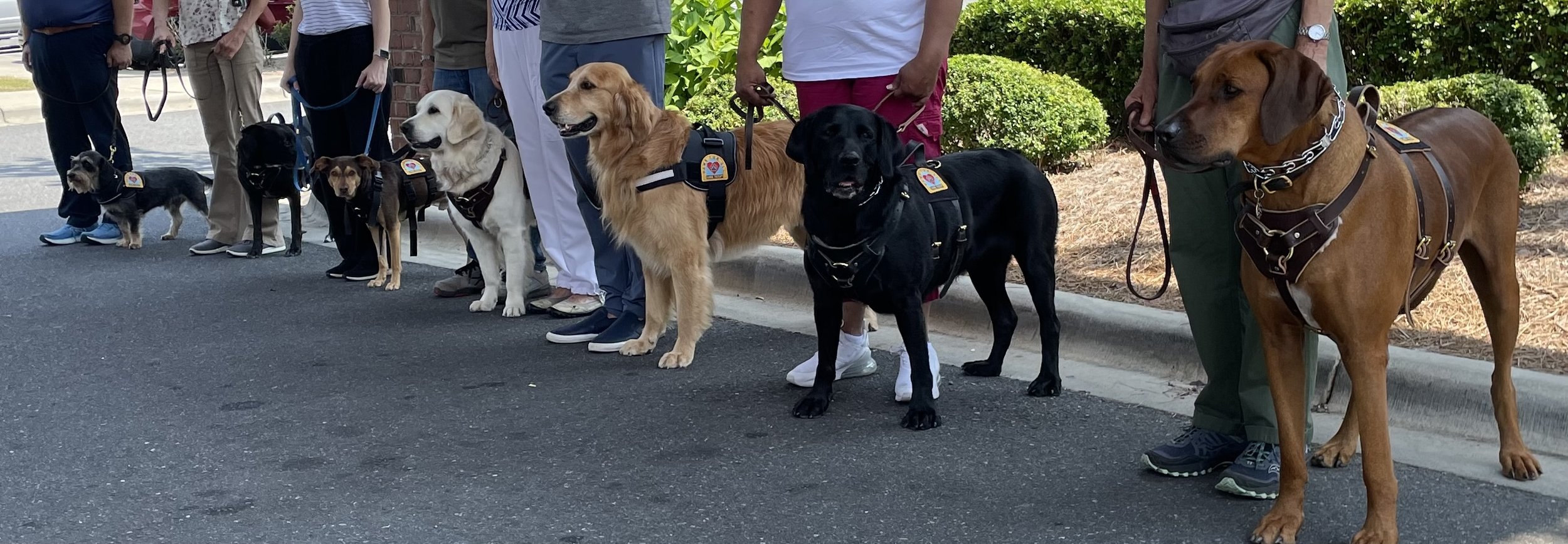
Temperament is the entry ticket, not the qualification
The dogs who thrive at this work share a particular profile: people-oriented without being frantic, confident without being pushy, and resilient: a dropped tray or a sudden shout registers and passes. Programs like Paws for All, the therapy dog effort run through Star Dog in Charlotte, exist because that profile still needs shaping into a working team. Training exposes the dog to the job's realities gradually, teaches the handler to manage interactions, and screens honestly: a dog who finds visits stressful should be retired from the idea kindly and early, because the work only functions when the dog enjoys it. Forcing a reluctant dog into wards and classrooms helps nobody in the room.
What visits actually demand
A visit is a stream of small challenges: a child who grabs, an elder whose hands shake, a beeping machine, a floor that smells of disinfectant, a long corridor of doors each holding a new person. The dog works the whole time, reading strangers while the handler reads the dog. Sessions are kept short for good reason, commonly an hour or so, and handlers watch for the dog's tells: lip-licking, turning away, a tail gone still. Ending five minutes early on a good note is the professional move, and facilities that host therapy teams value reliability and steadiness over novelty. It is quiet, purposeful work, which is precisely why the dogs who do it are prepared rather than merely friendly.

The handler is half the team
Evaluations test the pair because the pair is the unit that visits. Handlers manage the leash, the greetings, the dog's breaks, and the conversation, and they hold the responsibility for saying not today when the dog is unwell, tired, or off. Training for handlers covers infection-control basics for facility visits, how to position a dog for a bedside greeting, and how to accept that some patients will not want a visit, which is information, not rejection. If you are considering this path, expect to be trained as thoroughly as your dog, and to find that part unexpectedly rewarding: most handlers say the work changed their own patience first.
Common questions
Is a therapy dog the same as a service dog?
No. Service dogs are trained for tasks for one person with a disability and have legal public access. Therapy dogs visit facilities by invitation with their handlers and have no general access rights.
What breeds make good therapy dogs?
Any breed or mix with the right temperament. Retrievers are common because they are people-oriented and sturdy, but successful teams include everything from terriers to shepherds, as the lineup at any program shows.
How old should a dog be to start?
Most organizations require dogs to be at least a year old for evaluation, and the maturity is real: adolescence is a bumpy season. Foundation training and socialization can and should start much younger.
← All guides from Star Dog← Back to Star Dog